The distinction
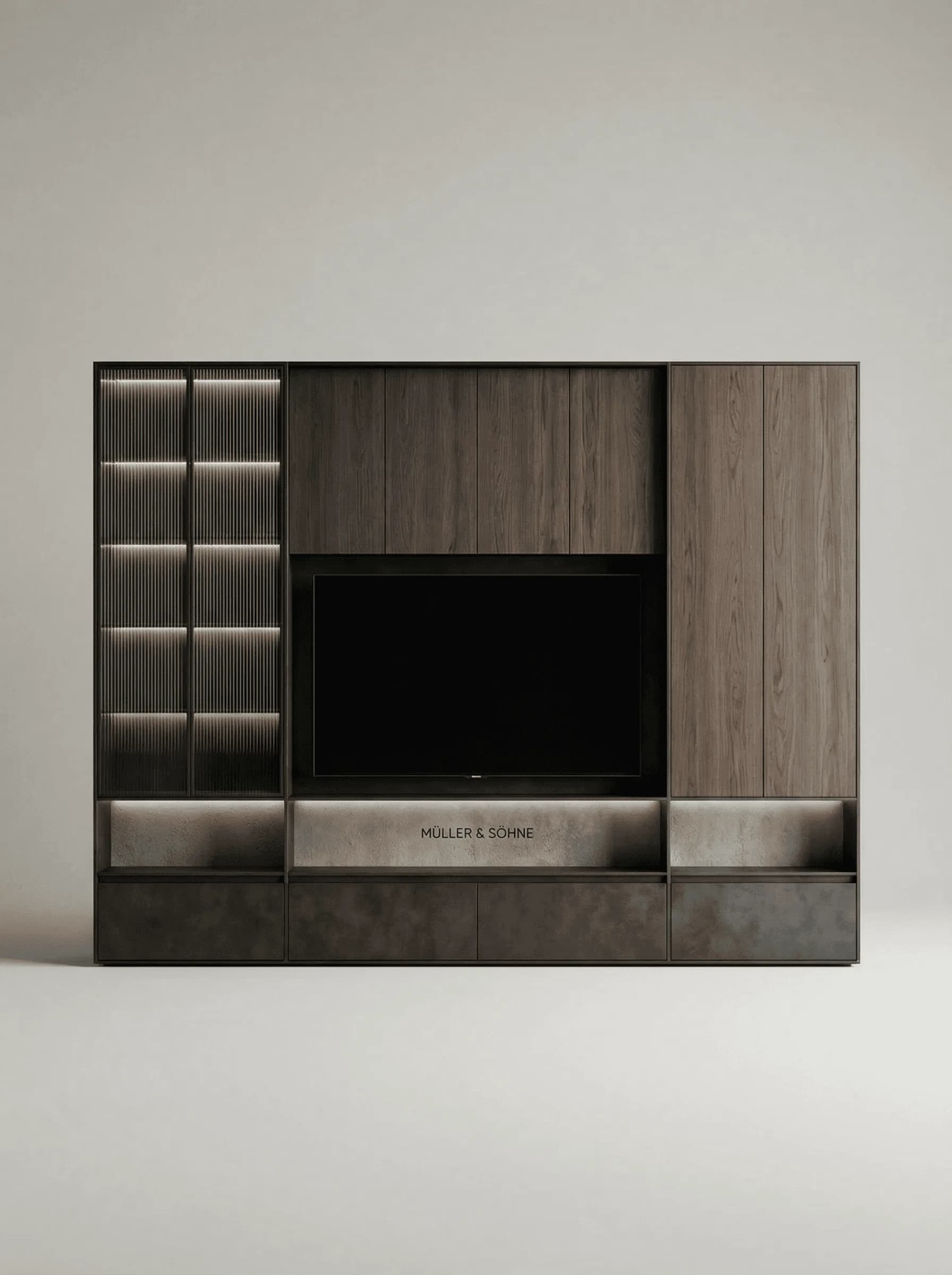
A "built-in TV unit" is a piece of cabinetry that wraps the television — usually a console below, sometimes flanking storage, occasionally a niche cut into the wall. The screen is the star of the composition.
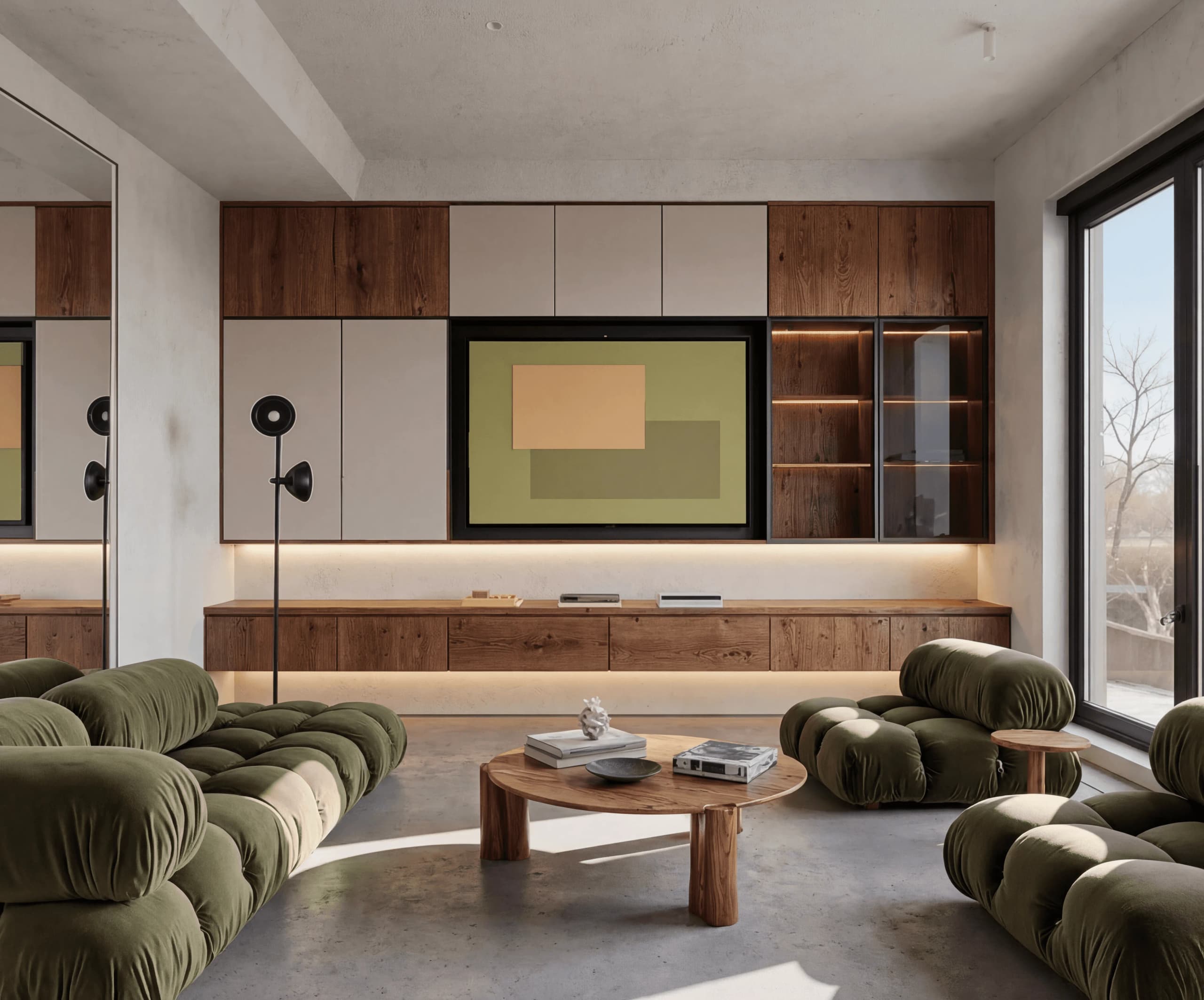
A "bespoke media wall" is a full architectural wall composition where the TV is part of the wall rather than mounted on it. Backlit shelving, integrated cabinet storage, sometimes a sliding-door system that hides the screen entirely. The wall reads as architecture; the screen is one element within it.
Both can be beautiful. They solve different problems and they live in different rooms differently. Here is how to choose.
When a built-in TV unit is the right call
Built-in TV units make sense when the screen is unambiguously the focal point of the room and you want it framed simply rather than hidden.
Small living rooms or dens. A full media wall can overwhelm a 12×14 room. A built-in TV unit with focused storage scales better.
Bedrooms. A TV niche or a simple wall-mounted unit with a console below reads cleaner than a full architectural wall.
Rooms with strong existing architecture. If the room already has a fireplace surround, original wainscoting, or a feature window competing for attention, a full media wall fights with what is already there.
Tighter budgets. A focused built-in TV unit can land at the lower end of custom pricing. A bespoke media wall is a bigger material and labor commitment.
When a bespoke media wall is the right call
Bespoke media walls earn their keep in rooms where you want the wall itself to be the design feature — where the goal is "this wall is a piece of architecture" rather than "the TV is mounted nicely."
Open-plan living. When the living area is part of an open floor plan, a media wall does double duty: it organizes storage and it defines the space architecturally.
Rooms with long, blank walls. A 16-foot wall is a gift. Full-wall compositions with illuminated shelving, hidden storage, and integrated AV use the proportions properly.
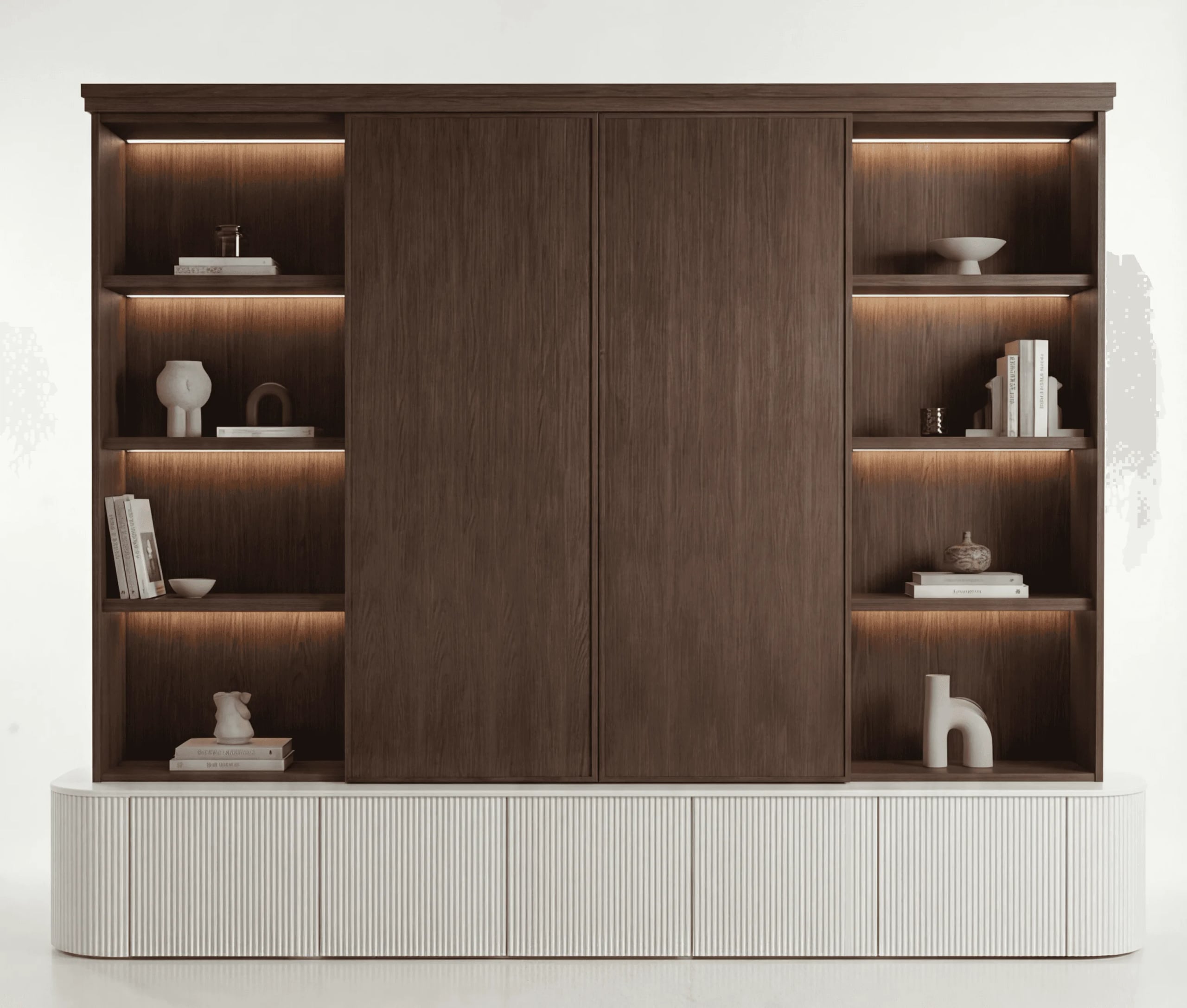
When you want the TV to disappear. A VELA-style sliding-door system hides the screen behind smooth wood when it is off — the wall reads as a gallery, not a TV mount. This is the single most-requested feature in our consultations.
When you are upgrading the room as a whole. If you are rethinking the living room — new lighting, new finishes, possibly new flooring — a bespoke media wall is the architectural anchor everything else hangs off.
What each does for resale
Both add value if they are well-executed and tasteful. Both can subtract value if they are over-personalized.
Built-in TV units tend to be a safer resale bet because they are easier for the next owner to imagine using as-is. Bespoke media walls add more value when the architecture and finishes are restrained enough that they read as "thoughtful upgrade" rather than "previous owner's taste."
A general rule: if the millwork would look at home in a real-estate listing photo without explanation, it is adding value. If it needs a paragraph of context, it is a personal investment more than a resale one.
AV integration
This is where bespoke media walls have a real advantage. A built-in TV unit usually leaves cables running behind drywall to a console. A bespoke media wall hides everything — including the soundbar — inside the millwork itself. Cable management, ventilation for set-top boxes, smart-home wiring, and speaker integration all live inside the wall.
If you have or are planning a serious AV setup — high-end speakers, components, smart-home control, motorized projector screen — the media wall pays for itself in cleaner integration.
Cost comparison
A focused built-in TV unit typically lands in the $5K–$15K range depending on materials and scope. A bespoke media wall usually starts around $20K and scales with size, materials, and integration. There is overlap at the boundary — a generous built-in with stone shelving can cost as much as an entry-level media wall.
The honest framing: if the budget conversation is uncomfortable, a well-designed built-in TV unit is the smart play. If the wall is going to be the design statement of the room, the media wall is what you actually want.
A simple decision framework
Is this wall the design feature of the room, or is the TV the design feature? Wall → media wall. TV → built-in.
Do you want the TV visible or hidden when it is off? Hidden → media wall (sliding-door system). Visible → either works.
Is the wall longer than 10 feet of usable space? Long wall → media wall earns its budget. Shorter wall → built-in is the right scale.
Are you upgrading the room as a system or just solving the TV question? Whole-room upgrade → media wall. TV-focused → built-in.